Furniture hinges rarely fail without warning. A cabinet door may sag, scrape the frame, or refuse to close softly. These small movements often reveal larger problems inside the fitting.
The question “why do some furniture hinges stop working properly” matters to manufacturers, buyers, and installers. Hinges carry repeated loads, absorb impacts, and operate in humid kitchens, wardrobes, and bathrooms. Poor alignment, weak plating, loose screws, and unsuitable opening angles can shorten their service life. In real workshops, even a high-quality hinge can fail when the cabinet panel is warped or the mounting plate is incorrectly positioned. That detail is easy to overlook.
Industry data supports closer attention to hardware quality. Grand View Research valued the global furniture market at about USD 516.66 billion in 2022. Its report also projects continued market growth through 2030, increasing pressure on manufacturers to improve durability and after-sales performance. The Freedonia Group’s World Furniture analysis highlights Asia, especially China, as a major furniture production and supply region. This makes Chinese hinge sourcing increasingly important.
Not every low-cost hinge is unreliable. Not every premium hinge is perfect.
The best China options usually combine tested materials, stable production, accurate drilling, corrosion resistance, and clear quality records. Buyers should examine cycle-test results, load ratings, adjustment ranges, and supplier inspection procedures. Reports from TÜV Rheinland and SGS also show why independent testing strengthens confidence in hardware claims. Still, certificates alone cannot replace practical inspection. A hinge that performs well in a laboratory may behave differently after months of dust, moisture, and careless installation. This guide examines the common failure causes and the evidence behind better furniture hinge choices.
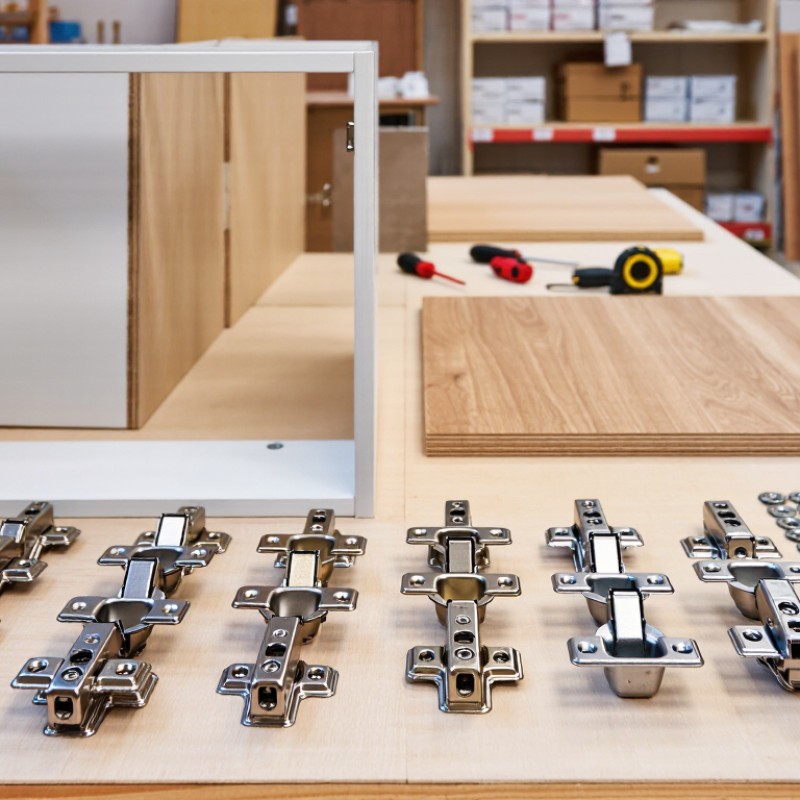
Furniture hinges are small, but they control alignment, weight, and daily movement. A cabinet door may open 20 times each day, creating thousands of load cycles annually. The BIFMA X5.5-2021 standard evaluates storage furniture through repeated opening, closing, and load testing. These tests reveal a practical truth: hinge quality affects the whole furniture system.
Failure often begins quietly. A loose screw creates side movement. Poor plating allows rust near humid kitchens. A weak spring causes the door to stop halfway. Field inspections also show that incorrect mounting causes many failures, not only defective metal. China remains a major furniture hardware manufacturing center, supported by broad machining, stamping, and surface-treatment capacity. Industry reports from CSIL consistently identify China as one of the largest global furniture production bases. However, low price alone is not a reliable quality signal.
Good hinges should match door weight, panel thickness, opening angle, and expected cycles. Stainless steel suits damp rooms, while adjustable concealed hinges help correct small installation errors. That matters. One millimeter of misalignment can become a visible gap or scraping edge. Buyers should request cycle-test records, corrosion-test results, and dimensional samples. ISO 7170 testing principles are useful references for furniture durability. Still, paperwork can mislead. A careful sample inspection is often more honest than a polished catalog.
Why Do Some Furniture Hinges Stop Working? China Best Options
Furniture hinges usually fail for three practical reasons: excessive load, misalignment, and corrosion. A cabinet door may look light, yet thick wood, glass panels, or heavy hardware can create constant stress. I have seen hinges bend slowly before the failure becomes obvious. The door then scrapes the frame, and users often blame the hinge alone.
Misalignment is especially damaging. If screws sit unevenly, the hinge leaves cannot share the load correctly. One side carries more pressure, causing loose joints, noisy movement, and distorted holes. During inspection, close the door slowly and check the gaps around its edges. Uneven gaps often reveal installation problems. Tightening every screw may not solve them. Sometimes the hinge position needs careful adjustment.
Corrosion creates another hidden weakness. Humid kitchens, bathrooms, coastal homes, and poorly sealed storage areas can attack exposed metal surfaces. Rust increases friction and may damage the hinge’s moving pin. Choose hinges with suitable protective treatment and verify their tested load capacity. When sourcing furniture hinges from China, request material details, cycle testing, dimensional samples, and corrosion-resistance records. Do not trust appearance alone. A shiny finish can still hide weak steel or poor tolerances. I have also learned that installation quality matters more than expected. Even a well-made hinge can fail when the door is overloaded or fitted without accurate spacing. Small errors become expensive.
Load, misalignment, and corrosion are the main mechanical conditions that can reduce hinge performance. The chart compares their relative contribution to common hinge failure symptoms using a normalized engineering risk index.
Higher scores indicate greater potential to cause stiffness, sagging, noise, looseness, or complete failure. Actual performance depends on hinge material, door weight, installation accuracy, humidity, and operating frequency.
Why Do Some Furniture Hinges Stop Working China Best Options?
EN 15570 durability tests reveal more than a hinge’s advertised lifespan. The standard measures repeated opening and closing under controlled loads. Depending on the performance category, testing may require 40,000, 80,000, or 120,000 cycles. These figures come from EN 15570:2008, the European standard for furniture hinges and hinge components.
A hinge passing 80,000 cycles is not automatically suitable for every cabinet. Testing uses fixed door weights, controlled alignment, and defined operating forces. Real kitchens are less polite. Steam enters the cabinet edge, screws loosen, and doors receive sideways pressure. FIRA technical guidance also stresses correct installation, screw retention, and adjustment during service. Small errors matter. A two-millimetre sag can increase friction at every opening.
Material thickness affects results, too. Thin mounting plates may deform before the hinge mechanism breaks. Corrosion testing should also be reviewed when furniture faces coastal air or frequent cleaning. EN 15570 focuses on strength and durability, but it cannot reproduce every household condition. That limitation deserves attention. A reported cycle count is evidence, not a promise.
For buyers comparing China furniture hinge options, request the tested cycle category, load condition, corrosion information, and adjustment record. Ask for the laboratory report, not only a sales number. A practical inspection should include uneven gaps, noisy movement, and loose screws after installation. These details often expose failure earlier than a catalogue specification.
Why Do Some Furniture Hinges Stop Working China Best Options?
QB/T 2189-2013 establishes quality requirements for furniture cup hinges in China. It covers important factors, including appearance, materials, dimensions, operating performance, durability, and corrosion resistance. These requirements help inspectors judge whether a hinge is suitable for repeated cabinet use. The standard also supports consistent testing between manufacturers and buyers.
In practical inspection, a reliable hinge should open smoothly without grinding sounds. Its spring should return the door firmly, not hesitate halfway. The cup, arm, mounting plate, and adjustment screws must fit correctly. Small dimensional errors can create uneven gaps or loose doors. Surface protection also matters, especially in kitchens and humid rooms. Rust often begins around screw holes and hidden edges.
However, compliance does not solve every failure. Installation depth, screw quality, door weight, and adjustment habits remain critical. A hinge may pass controlled testing but fail after careless fitting. This point is easy to overlook. Inspectors should check samples, test repeated movement, and compare measured dimensions with the standard. Buyers should request current test records and clear material information. The standard offers a dependable reference, but real performance depends on both manufacturing control and installation practice.
Why Do Some Furniture Hinges Stop Working China Best Options?
Choosing Chinese furniture hinges should begin with the load, material, and expected cycle count. A light cabinet door needs different hardware from a solid wood wardrobe door. Check the door weight, height, thickness, and mounting position before ordering. A hinge rated for 30,000 cycles may fail early if the door is overloaded or poorly aligned.
Steel hinges suit demanding applications and frequent opening. Stainless steel performs better in kitchens, bathrooms, and humid rooms because it resists corrosion. Zinc alloy offers a smooth appearance but may not suit heavy doors or repeated impact. For high-cycle furniture, ask for cycle-test data, load-test results, and sample approval. Do not rely on appearance alone. A polished hinge can still have weak screws or thin internal parts.
Tips: Leave a safety margin above the calculated load. Test several samples with the actual door panel. Inspect screw holes after repeated use. Soft-close models also need correct adjustment, or their dampers may wear quickly. I sometimes over-specify hinges, which raises cost without improving performance. That is a useful mistake to avoid. Supplier documents help, but real fitting conditions matter more. Even a strong hinge can fail when the cabinet frame twists, the screws loosen, or the door rubs against the side panel.
| Hinge Option | Typical Construction | Typical Load Guidance per Hinge | Typical Cycle Requirement | Best Material or Finish | Adjustment and Installation | Recommended Furniture Use | Common Reasons for Failure | Best Match When |
|---|---|---|---|---|---|---|---|---|
| Concealed European Cup Hinge, 35 mm | Cold-rolled steel or zinc alloy cup, steel arm and mounting plate; generally available in full-overlay, half-overlay and inset versions. | About 5–10 kg per hinge | Approximately 50,000–100,000 cycles in quality-tested models | Nickel-plated steel for normal indoor furniture; stainless steel for humid rooms. | Usually offers side, height and depth adjustment. The 35 mm cup normally requires a 45 mm cup-hole depth and accurate boring. | Kitchen cabinets, wardrobes, office storage and bathroom furniture. | Incorrect cup depth, loose mounting screws, excessive door weight, poor alignment or particleboard pull-out. | Standard cabinet doors requiring concealed installation and three-way adjustment. |
| Soft-Closing Concealed Cup Hinge | Concealed hinge with an integrated hydraulic or damper mechanism that controls the final closing movement. | About 4–8 kg per hinge | Approximately 50,000–80,000 cycles, depending on damper design | Nickel-plated steel or stainless steel; corrosion-resistant damper components are preferred in humid conditions. | Requires correct overlay selection and accurate cabinet-door alignment. Damper force may be fixed or adjustable. | Residential kitchens, wardrobes, bathroom cabinets and quiet-close furniture. | Damper leakage, closing force set too high, door misalignment, impact loading or operation outside the rated temperature range. | Projects where reduced closing noise and controlled movement are more important than maximum load. |
| Heavy-Duty Concealed Hinge | Reinforced steel arm, thicker mounting plate and larger fasteners than a standard cabinet hinge. | About 8–15 kg per hinge | Approximately 50,000–100,000 cycles when correctly installed | Thick nickel-plated steel or stainless steel; use corrosion-resistant fasteners in damp environments. | Needs a rigid cabinet side, adequate screw engagement and correct load distribution across multiple hinges. | Tall wardrobe doors, wide kitchen doors, solid-wood panels and storage units with heavier fronts. | Cabinet-side deformation, insufficient screws, excessive door width, hinge spacing that is too close or overloaded dampers. | Heavy or wide doors that exceed the practical capacity of ordinary 35 mm hinges. |
| Stainless-Steel Butt Hinge | Two flat leaves joined by a pin; commonly manufactured from stainless steel sheet or machined stainless steel. | About 10–25 kg per hinge, depending on size and screw pattern | Often 50,000+ cycles in suitable furniture applications | 304 stainless steel for general humid interiors; 316 stainless steel for severe coastal or chloride exposure. | Requires mortising or surface fitting and accurate hinge-leaf alignment. It provides limited adjustment after installation. | Solid-wood doors, utility cabinets, outdoor furniture and applications needing visible, robust hardware. | Pin wear, leaf bending, poor mortise fit, undersized screws, galvanic corrosion or door sag caused by insufficient hinges. | Visible hardware, solid materials and humid or semi-outdoor environments where corrosion resistance matters. |
| Surface-Mount Furniture Hinge | Steel or stainless-steel leaves mounted directly on the cabinet and door surface; no large cup boring is required. | About 3–10 kg per hinge | Approximately 30,000–60,000 cycles | Powder-coated steel for dry interiors; stainless steel or plated steel for humid conditions. | Simple installation with visible screws; limited adjustment makes accurate positioning important. | Small cabinets, lightweight doors, retrofit projects and furniture made from thin panels. | Screw pull-out, panel splitting, bent leaves, poor surface flatness or using the hinge on doors that are too heavy. | Fast installation, visible hardware or cabinet panels that cannot accept a concealed cup. |
| Pivot Hinge | Top-and-bottom pivot pins or sockets transfer the door load vertically rather than relying only on side-mounted leaves. | About 15–40 kg per door set | Approximately 30,000–80,000 cycles | Hardened steel or stainless steel pins with steel or zinc-alloy housings. | Requires precise top and bottom alignment, adequate vertical support and correct door clearance. | Tall cabinet doors, flush furniture fronts, display units and some frameless storage systems. | Misaligned pivots, weak top or bottom panels, dirt in the socket, inadequate clearance or excessive eccentric load. | Tall doors or designs where a clean front appearance and vertical load transfer are required. |
| Continuous Piano Hinge | Long, interlocking steel or stainless-steel leaves running along much or all of the door height. | About 10–30 kg per metre of hinge length | Approximately 50,000–100,000 cycles | Stainless steel for moisture exposure; plated or powder-coated steel for normal indoor use. | Must be fixed with closely spaced screws to a firm substrate. It distributes load well but offers little post-installation adjustment. | Tool cabinets, benches, chests, folding panels and long doors requiring continuous support. | Loose or widely spaced screws, hinge-leaf buckling, poor substrate strength, debris in the knuckle or incorrect hinge length. | Long doors, repeated-use panels or applications where distributed support is more valuable than adjustability. |
| Glass Door Hinge | Clamp-on or drilled-glass design using zinc alloy, stainless steel or brass components with elastomer pads. | About 3–8 kg per hinge | Approximately 30,000–50,000 cycles | Stainless steel, nickel-plated zinc alloy or chrome-plated brass; soft pads must be compatible with the glass. | Clamp models avoid drilling; drilled-glass models require correctly sized holes and professional handling. Adjustment is usually limited. | Glass display cabinets, bathroom storage and light glass-front furniture. | Over-tightening, missing pads, incorrect glass thickness, edge damage, loose clamps or door weight beyond the rating. | Glass doors where the hinge must grip or pass through the glass without a conventional wood-door cup. |
| Lift-Up Flap Hinge | Friction, spring-assisted or gas-assisted mechanism supporting a horizontally or vertically opening furniture flap. | About 2–10 kg per mechanism set | Approximately 30,000–50,000 cycles | Steel mechanism with plated or powder-coated finish; stainless steel is preferred for humid locations. | Requires correct flap weight, center of gravity and opening angle. Often needs a matched left-and-right set. | Overhead cabinets, bar units, appliance garages and compact storage flaps. | Incorrect flap weight, spring fatigue, gas-spring leakage, side-load stress, poor mounting or exceeding the opening angle. | Flaps or upward-opening fronts where controlled opening and support are required. |
It controls door alignment, weight support, and daily opening movement. Small hardware affects the whole cabinet.
Repeated opening creates thousands of load cycles. Screws loosen, springs weaken, and metal slowly bends.
Check the door gaps. Uneven gaps, scraping edges, noise, or tilted doors often reveal mounting problems.
Not always. The hinge position may need adjustment, especially when screw holes sit unevenly.
Humidity attacks exposed metal, especially near screw holes and hidden edges. Rust increases friction around the moving pin.
Choose suitable corrosion protection and verified materials. Stainless steel can help, but its test results still matter.
Request material details, cycle-test records, corrosion results, dimensional samples, and tested load capacity.
No. A shiny finish may hide weak steel or poor tolerances. Sample inspection is often more honest.
Yes. Excessive door weight, inaccurate spacing, poor screws, or careless installation can cause failure.
Open it slowly. It should move smoothly, return firmly, and avoid grinding sounds or halfway hesitation.
Furniture hinges play a key role in supporting doors, aligning moving panels, and allowing smooth, repeated opening and closing. When they become loose, noisy, stiff, or unable to hold position, the entire furniture unit may feel unsafe and inconvenient. Understanding why do some furniture hinges stop working properly requires examining common causes such as excessive load, poor alignment, repeated impact, weak installation, and corrosion caused by moisture or unsuitable environments.
Durability testing under EN 15570 can help evaluate how well hinges perform through repeated operating cycles, while QB/T 2189-2013 provides quality considerations for cup hinges used in furniture applications in China. The most suitable Chinese hinge option should therefore be selected according to door weight, expected cycle count, material strength, adjustment range, corrosion resistance, and installation accuracy. Matching these factors can improve service life, reduce maintenance, and support more reliable furniture performance.

Refa Tools