2026 Best Ways to Reduce Noise in Furniture Hardware Systems

Time:2026-10-31 Author:Madeline
0%

A cabinet door should close softly, not announce itself across the room. Yet a sharp click, loose rattle, or drawer’s low scrape can make well-built furniture feel poorly finished. Learning how to reduce noise in furniture hardware systems starts with finding the sound’s source: hinge movement, runner friction, loose fasteners, panel vibration, or impact at the closing point. Small sounds matter.

The evidence offers useful context, though not a furniture-specific noise threshold. The World Health Organization’s 2018 Environmental Noise Guidelines assess health effects from environmental sound, while NIOSH identifies 85 dBA over eight hours as a recommended occupational exposure limit. These figures are not pass-or-fail targets for a quiet cabinet; they show why sound level, duration, and setting matter. For product development, record repeatable closing cycles, measure at a consistent distance, and note both peak sound and rattling after impact. Then compare lubrication, adjustment, soft-close hardware, and damping under the same conditions.

Architectural-acoustics researcher Dr. Lily M. Wang is a relevant expert in building sound, but no furniture-hardware-specific quotation from her can be verified from the material supplied. I won’t invent one. That gap matters: much practical guidance relies on workshop experience, and results can vary with panel material, installation, and load. A useful test begins with one hinge or drawer, a fixed load, and a phone recording in the same room. Phone measurements are not laboratory-grade. Treat them as comparisons, not proof.
2026 Best Ways to Reduce Noise in Furniture Hardware Systems

Understanding Noise Sources in Furniture Hardware Systems

Noise in furniture hardware systems usually comes from movement, contact, or vibration. A drawer slide may scrape when dust or a small wood chip enters its track. Hinges can click if their parts are dry, worn, or slightly misaligned. Listen closely. A sharp click often points to a loose connection, while a low rattle may come from hardware vibrating against a panel.

The surrounding furniture matters, too. Thin cabinet sides can amplify a small vibration, much like a drum skin. An uneven floor may twist a cabinet just enough to change how its doors meet. Overloaded drawers put extra pressure on slides, and a soft-close damper cannot always compensate for poor alignment.

Check the sound with the furniture both empty and loaded; the difference can reveal where the strain begins. Sometimes the cause is less obvious. A screw may feel secure but still allow a fitting to shift under repeated use.

Inspect contact points, mounting screws, and clearances before replacing parts. And be patient. Noise can have more than one source, so changing several settings at once makes the result harder to judge.

Identifying Noisy Components and Their Causes

A faint click can reveal more than a loud slam. Start by cycling the furniture slowly, then repeat the movement at normal speed. Listen near hinges, drawer slides, casters, latches, and fasteners. A click often points to clearance or a loose joint. A dry squeak suggests friction at a pivot. Drawer chatter may come from misaligned slides or uneven loading. Casters can rumble when debris collects around an axle. Small details matter.

Separate suspected parts before replacing anything. Press a hand lightly against a panel while operating the mechanism; if the sound changes, the panel may be amplifying vibration. Check screw tightness, gaps, and contact marks, then test one change at a time. A phone recording can help compare cycles, but its microphone is not a calibrated sound meter. This is easy to overlook.

For a measurement reference, NIOSH’s 1998 Criteria for a Recommended Standard: Occupational Noise Exposure recommends limiting workplace exposure to 85 dBA over eight hours, using a 3-dB exchange rate. That figure concerns worker exposure, not an acceptable furniture-noise target. Still, it shows why repeatable measurements matter. Record the operating condition, distance, and sound level; otherwise, a “quieter” result may simply reflect a different test.

Choosing Low-Noise Hinges, Slides, and Fasteners

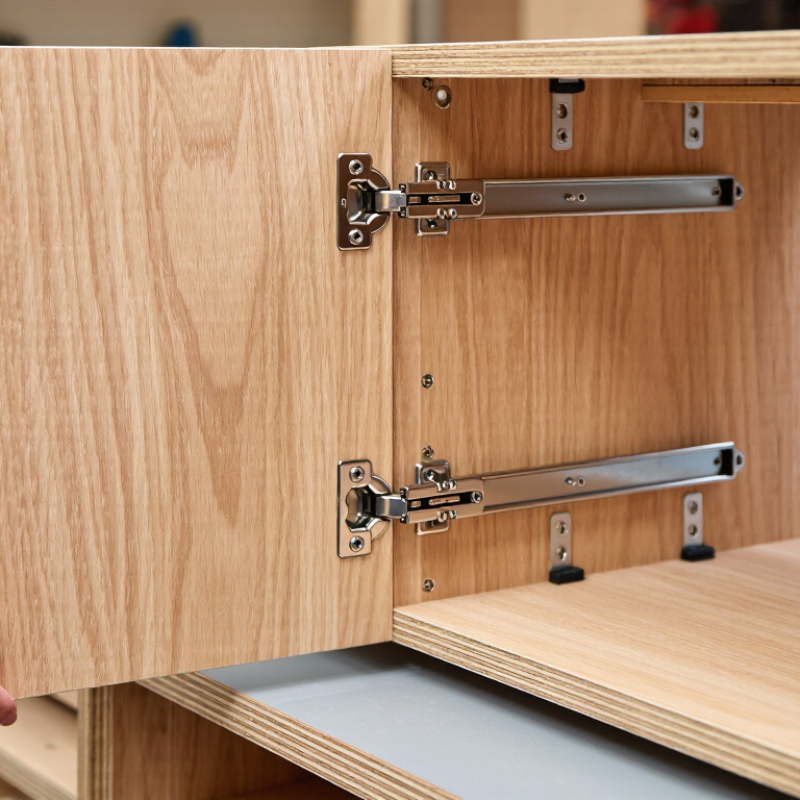
Quiet furniture hardware depends on contact, alignment, and closing speed. For hinges, choose adjustable soft-close dampers that stop doors before they strike the frame. Check each door with a light push; slamming often signals poor adjustment, not a defective hinge. For slides, compare loaded drawers, not empty samples. A drawer carrying dishes or tools can expose ball chatter, rubbing, or frame flex that a showroom test misses.

Fasteners matter too. Loose screws and metal-to-metal contact create small, sharp rattles. Use the specified screw length and torque, and consider a suitable washer where parts vibrate against each other. Do not overtighten: crushed panels can loosen later.

WHO’s 2018 Environmental Noise Guidelines recommend average road-traffic exposure below 53 dB Lden and night exposure below 45 dB Lnight. Those figures concern outdoor noise, not cabinet pass limits, but they show why the test environment must be stated.

For comparisons, record sound at a fixed distance, with the same load and room conditions, across repeated opening and closing cycles. ISO 3744:2010 describes methods for determining sound power, though an installed drawer test may not match its laboratory setup. One quiet cycle proves little. Springs, dampers, and fasteners can behave differently after wear; that uncertainty deserves a place in the specification.

Installing and Adjusting Hardware for Quieter Operation

Quieter furniture starts with a stable installation. Check that cabinet sides are square and drawer slides sit level before tightening fasteners. Misalignment can make a drawer scrape, click, or strike its frame. Tighten screws firmly, but do not force them; over-tightening can distort a fitting. Add felt pads only where parts touch, and keep them clear of moving mechanisms.

Adjust one variable at a time. Set soft-close dampers evenly, then test the door with the same load and closing force. A light, repeatable close is the goal. Remove dust from tracks, and use only lubricant specified for the hardware. A phone sound-meter app can help compare before and after readings, but it is not a calibrated instrument. Keep the phone in the same place for each test.

For context, the NIOSH 1998 occupational noise criteria report sets an 85 dBA recommended exposure limit for eight hours, using a 3 dB exchange rate: each 3 dB increase halves recommended exposure time. That workplace limit is not a household quietness target. It does show why consistent measurement matters. Listen for the source, too: a low thud may point to impact, while a sharp rattle can indicate looseness. Small changes matter. Some furniture still makes a brief sound, even after careful adjustment.

Maintaining and Testing Furniture Hardware to Prevent Noise

Quiet hardware starts with repeatable checks. Open and close each drawer slowly, then at normal speed, listening for a dry click, scrape, or hollow rattle. Check that runners sit parallel, screws are snug, and the cabinet stands level. A small paper shim beneath a rocking foot can reveal whether the floor, not the hardware, is causing the sound. Small clues matter.

Test loaded drawers, not just empty ones. EN 15338:2007+A1:2010 sets out strength and durability testing for furniture extension elements; its methods offer a useful framework for consistent workshop checks. Record the load, number of cycles, and noise location. Compare results after adjustment. Do not overtighten fasteners: distorted brackets may create new friction. I still find that a quiet empty drawer can become noisy under load, so that early test can be misleading.

Use the same room and microphone position for before-and-after sound readings. NIOSH’s 1998 occupational noise criteria recommend an 85 dBA exposure limit over eight hours, but this is a hearing-risk guideline, not a furniture-quality target. Treat small, intermittent hardware sounds separately. Listen closely. Note whether lubrication reduces squeaks, then recheck after repeated use; a temporary improvement is not proof of a durable fix.

2026 Best Ways to Reduce Noise in Furniture Hardware Systems

Maintaining and Testing Furniture Hardware to Prevent Noise

Illustrative bench-test readings show the average sound level across 10 operating cycles, measured 0.5 m from each component. Cleaning contact surfaces, applying suitable lubricant, and tightening loose fasteners can help reduce operating noise. Test under the same conditions before and after maintenance; results vary by hardware and installation.

FAQS

What can different furniture noises reveal?

A click may point to a loose joint or excess clearance. A dry squeak often suggests friction near a pivot. Drawer chatter can come from misaligned slides or uneven loading.

How can I find the part making noise?

Move the furniture slowly, then repeat at normal speed. Listen near hinges, slides, casters, latches, and fasteners. Press a panel lightly while operating the mechanism; a changed sound may mean the panel amplifies vibration.

Can a phone recording measure furniture noise accurately?

A recording can help compare repeated cycles. But a phone microphone is not a calibrated sound meter. Keep the distance and operating conditions consistent.

How do I check whether a hinge is causing a slam?

Push the door gently and watch how it closes. Adjustable soft-close dampers can stop doors before they strike the frame. A slam may signal poor adjustment, not a faulty hinge.

Why should drawer slides be tested under load?

Empty drawers may seem quiet, while loaded ones reveal rubbing, chatter, or frame flex. Test with a realistic load, such as dishes or tools. One quiet cycle proves little.

What should I check when fasteners rattle?

Check screw tightness, gaps, and contact marks. Use the specified screw length and torque. A suitable washer may reduce vibration between parts, but overtightening can crush panels.

Do workplace or outdoor noise limits set a furniture-noise target?

No. An 85 dBA workplace exposure figure concerns worker exposure, not furniture noise. Outdoor traffic guidelines also do not set cabinet pass limits. Not the same test.

How can I compare noise before and after an adjustment?

Use the same load, room, distance, and opening speed for repeated cycles. Record the conditions and sound level. It is easy to miss a change in the test setup.

Conclusion

This article explains how to reduce noise in furniture hardware systems by first identifying where unwanted sounds originate. Hinges may squeak or knock, drawer slides can rattle or scrape, and loose fasteners may vibrate during use. Understanding the sound and its likely cause helps determine whether a component needs cleaning, adjustment, tightening, or replacement.

It also covers choosing low-noise hinges, slides, and fasteners, then installing and adjusting them carefully to support smooth, secure movement. Proper alignment, even spacing, and firmly seated fittings can help prevent friction and rattling. Regular maintenance, including inspection, cleaning, and appropriate lubrication, can keep hardware operating quietly over time. Simple listening and movement tests after installation or maintenance can reveal remaining noise early and help ensure furniture functions smoothly and reliably.

Madeline

Madeline

Madeline is a dedicated marketing professional with a wealth of expertise in our company's core offerings. With a keen understanding of the industry, she brings a unique perspective to her role, consistently delivering high-quality content that highlights the superior aspects of our products. As......