How to Choose Hardware for Flat Pack Furniture Assembly?

Time:2026-10-07 Author:Ethan
0%

Flat-pack furniture has become a mainstream manufacturing and retail model. Grand View Research estimates that the global ready-to-assemble furniture market reached approximately USD 13.6 billion in 2022. It also forecasts steady growth through 2030. This expansion makes hardware selection more important than ever. A loose cam lock, undersized screw, or weak dowel can turn a neat cabinet into a frustrating repair.

This guide explains how to choose hardware for flat pack furniture assembly using load, material, tolerance, and assembly frequency. Particleboard needs different fasteners from plywood or solid wood. A drawer runner also demands greater precision than a simple shelf pin. The IKEA FY2024 financial report recorded EUR 45.1 billion in retail sales, showing the scale of furniture systems that depend on repeatable assembly. Small hardware decisions affect millions of products.

Ingvar Kamprad, IKEA’s founder, wrote, “To design a desk which may cost $1,000 is easy; to design a functional and good desk which will cost $50 can only be done by the very best.” His point applies directly to connectors, screws, and fittings. Affordable does not mean careless. It means engineered efficiency. Yet industry reports rarely separate hardware failure from installation errors. That limitation deserves attention. A fitting may be strong in testing but confusing in a customer’s hands. Therefore, this outline considers both technical performance and real assembly conditions, including stripped screw heads, missing parts, uneven panels, and repeated disassembly. Some recommendations will remain practical rather than perfect. That is intentional. Furniture hardware should work outside the laboratory.
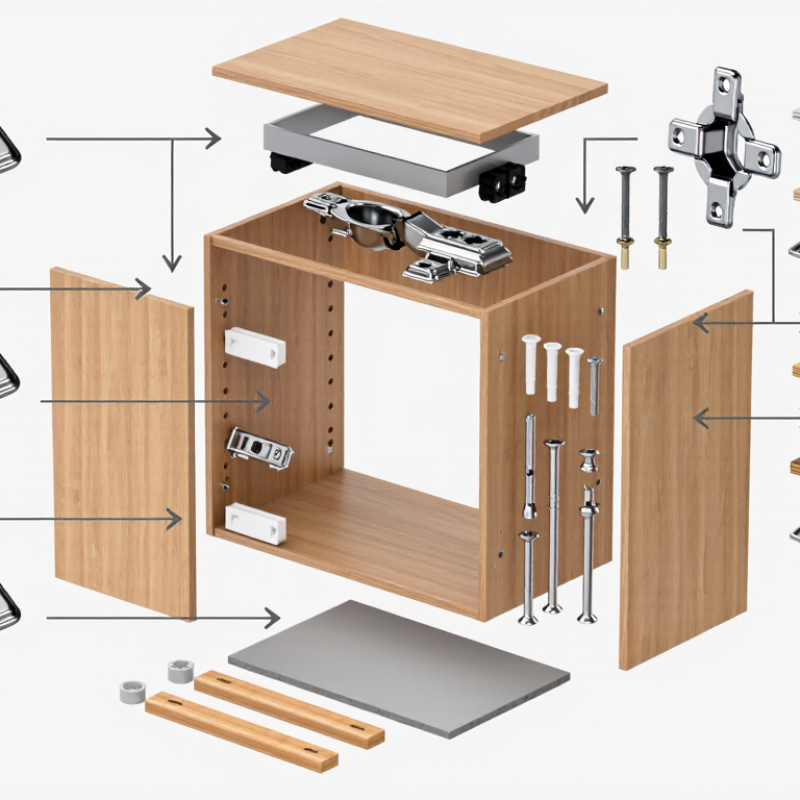
How to Choose Hardware for Flat Pack Furniture Assembly?

Define Load Requirements with ISO 7170 Durability and Strength Tests

How to Choose Hardware for Flat Pack Furniture Assembly?

Hardware selection should begin with the expected load, not the screw packet. A wall shelf holding books experiences different stress from a bedside cabinet holding clothing. ISO 7170 durability and strength tests help define these demands through controlled loading, repeated opening, impact, and stability checks. The standard does not prescribe one universal fastener. Instead, it offers a disciplined way to evaluate whether joints remain safe and functional under realistic use.

For flat pack furniture, test the complete connection, including screws, cams, dowels, panels, and edge distances. A joint may survive a single heavy load but loosen after thousands of drawer cycles. Record the applied load, cycle count, panel thickness, and visible movement. Measure gaps with a feeler gauge, and inspect stripped threads or crushed particleboard. Small details matter. Hardware that feels strong during assembly can still fail around a cam lock.

Practical experience suggests testing beyond the minimum expected load, especially when users may sit, lean, or move the furniture repeatedly. Use pilot holes that match the panel material, and avoid excessive tightening. It can damage the core. ISO 7170 results should guide hardware decisions, but they cannot replace product-specific judgment. A test fixture may also behave differently from a crowded home. That limitation deserves attention. Recheck the design after transport, seasonal humidity changes, and an imperfect assembly attempt.

Match Panels, Cam Locks, Dowels, and Screws to Joint Loads

How to Choose Hardware for Flat Pack Furniture Assembly?

Match Panels, Cam Locks, Dowels, and Screws to Joint Loads

Flat pack furniture works best when each fitting carries the load it was designed for. Start by reading the joint, not the hardware bag. A thick side panel can accept a cam lock with a broad tightening surface. A thin shelf may split around the recess. Measure the load. Heavy books create steady downward force, while a frequently moved cabinet faces twisting and impact.

Use dowels to align panels and resist sideways movement. They should fit cleanly, without crushing the board. Cam locks pull panels together, but they should not carry every force alone. Add screws where the joint needs stronger clamping or repeated service. Keep screws short enough to avoid breaking through the finished face. Details matter. Pilot holes reduce swelling in soft particleboard, although an oversized hole can weaken the grip.

Match hardware to the panel material as well as the load. Particleboard, plywood, and fiberboard behave differently under pressure. For a tall bookcase, combine dowels, cam locks, and rear-panel restraint to reduce racking. For a light drawer, smaller screws may be adequate. In my assembly checks, I have sometimes trusted a tight cam lock too much. The joint felt solid until the cabinet moved. That mistake taught me to test wobble, edge distance, and screw bite before loading furniture. A small sample joint can reveal more than confident guesswork.

Check Fastener Pull-Out and Shear Ratings Against ANSI/BIFMA Tests

Choosing hardware for flat pack furniture starts with more than matching screw diameter to a pre-drilled hole. Check each fastener’s pull-out and shear ratings against the applicable ANSI/BIFMA performance tests. Pull-out measures how much force removes a connector from the panel. Shear measures sideways force, such as a loaded shelf pushing against a joint. These values are not interchangeable.

Review the test conditions carefully. Panel thickness, material density, pilot-hole size, installation torque, and loading direction can change results. A connector rated for thick plywood may perform poorly in a lightweight particleboard panel. Ask for test reports from a qualified laboratory, not only supplier data sheets. Confirm that the tested hardware matches your production hardware exactly. Small changes matter.

During assembly trials, use a calibrated torque driver and record damaged holes, loose joints, and visible panel crushing. Apply repeated loading, not just one impressive pull. Furniture experiences movement, relocation, and uneven use. I once treated a high pull-out rating as proof of overall strength. That was careless. The joint later failed in shear because the side panel flexed first. Design with a suitable safety margin, and inspect the weakest connection, not the strongest one. ANSI/BIFMA testing improves confidence, but real assembly conditions still deserve honest review.

Select Corrosion-Resistant Hardware Using ISO 9227 Exposure Classes

Choosing hardware for flat pack furniture starts with the real environment, not the lowest purchase price. A bedroom cabinet needs different protection from furniture used near a coast, bathroom, or unheated warehouse. ISO 9227 specifies neutral salt spray, acetic salt spray, and copper-accelerated salt spray test methods. It does not define service exposure classes. Those categories are commonly interpreted with ISO 12944 corrosion classifications.

For screws, cam locks, brackets, and connector plates, request the test method and exposure duration from the supplier. Neutral salt spray can compare coatings under controlled conditions. However, it cannot predict exact indoor service life. A test result is evidence, not a promise. Check coating continuity around threads, cut edges, and punched holes. These small areas often rust first. Zinc-coated steel may suit dry interiors, while stainless steel is safer around condensation and salt-laden air.

The NACE IMPACT study estimated global corrosion costs at 2.5 trillion dollars annually, equal to about 3.4% of global GDP. It also reported that 15–35% of corrosion costs could be avoided through better practices. That figure supports careful hardware selection, but it does not replace practical inspection. I would also test assembled furniture, not only loose fasteners. Trapped moisture inside a cam fitting can create a hidden failure point. Salt spray alone may miss that detail.

Add Anti-Tip Hardware Considering CPSC’s 22,000 Annual Injuries Estimate

When choosing hardware for flat pack furniture, treat anti-tip protection as essential, not optional. The U.S. Consumer Product Safety Commission estimates that furniture tip-over incidents cause about 22,000 emergency-department injuries each year. Its furniture tip-over data also identifies children as especially vulnerable. A tall cabinet can become dangerous when a drawer is opened on an uneven floor.

Select hardware that matches the unit’s weight, height, and wall type. Steel brackets, reinforced straps, and suitable anchors usually provide better resistance than thin plastic fittings. The ASTM F2057 furniture safety standard recommends stability and anti-tip considerations for clothing storage units.

Follow its principles, even when assembling smaller home furniture. Read the installation instructions carefully. Test the fastener’s grip, not just its appearance.

During assembly, place the heaviest items in lower compartments. Secure the furniture to a structural stud whenever possible. For masonry or hollow walls, use anchors designed for that surface. Leave no loose strap behind the cabinet. It may look secure, but small gaps can reduce performance. I have seen installers focus on speed and overlook wall conditions. That is a costly mistake. Recheck the connection after moving the furniture or changing its load. Standards help, but real rooms are imperfect. Floors shift. Hardware can loosen. Safety needs another look.

FAQS

How should hardware selection begin for flat pack furniture?

Start with the expected load, not the screw packet. A book shelf and bedside cabinet face different stresses. Consider weight, movement, and user contact.

What should a durability test examine?

Test the complete joint, including screws, cams, dowels, panels, and edge distances. Apply loads, repeat drawer cycles, and check stability. Record gaps and movement.

Why are repeated loading cycles important?

A joint may survive one heavy load but loosen after thousands of cycles. Open and close drawers repeatedly. Inspect stripped threads and crushed particleboard.

How can pull-out and shear performance be checked?

Pull-out measures removal force. Shear measures sideways force. Do not treat these ratings as interchangeable. Test the weakest connection, not the strongest one.

Which test details can change fastener performance?

Panel thickness, material density, pilot-hole size, torque, and loading direction can change results. A fastener suited to plywood may fail in lightweight particleboard.

What assembly practices help prevent joint damage?

Use pilot holes matched to the panel material. Apply controlled torque with a calibrated driver. Excessive tightening can crush the panel core. That mistake is easy.

How should hardware be selected for damp environments?

Match protection to the environment. Dry interiors may suit coated steel. Condensation, coastal air, or bathrooms may require stainless steel. Inspect threads and punched edges.

Can salt spray results predict furniture service life?

Not exactly. Salt spray compares coatings under controlled conditions, but indoor moisture behaves differently. Test assembled furniture too. Hidden moisture inside a cam fitting may cause failure.

What should be checked after testing and transport?

Recheck joints after relocation, seasonal humidity changes, and imperfect assembly. Measure new gaps with a feeler gauge. A home can behave differently from a test fixture.

How much safety margin should the design include?

Test beyond the minimum expected load when users may sit, lean, or move furniture. The margin should reflect real use. I once trusted one high rating too much. That judgment was incomplete.

Conclusion

Choosing the right hardware is essential for creating flat pack furniture that is stable, durable, and safe throughout its service life. The process begins by defining expected loads and usage conditions, then using ISO 7170 durability and strength testing principles to evaluate whether the design can withstand repeated assembly, movement, and everyday stress. Panels, cam locks, dowels, and screws should be matched to the loads carried by each joint, while fastener pull-out and shear ratings should be checked against relevant ANSI/BIFMA test criteria.

To understand how to choose hardware for flat pack furniture assembly, also consider the environment where the furniture will be used. Hardware should have suitable corrosion resistance based on ISO 9227 exposure classes, particularly in humid areas. Finally, include properly positioned anti-tip hardware for tall or top-heavy units, since furniture tip-over incidents contribute to an estimated 22,000 injuries annually. A careful combination of testing, material selection, joint evaluation, and safety features leads to reliable and user-focused furniture construction.

Ethan

Ethan

Ethan is a seasoned marketing professional with a deep expertise in our company's innovative product line. With a passion for sharing knowledge and insights, he takes the lead in regularly updating our corporate blog, where he explores industry trends, product features, and effective marketing......